02 / Form & construction
Anatomy
How Kobots are built, from their nanocarbon skin to their muscles and senses.
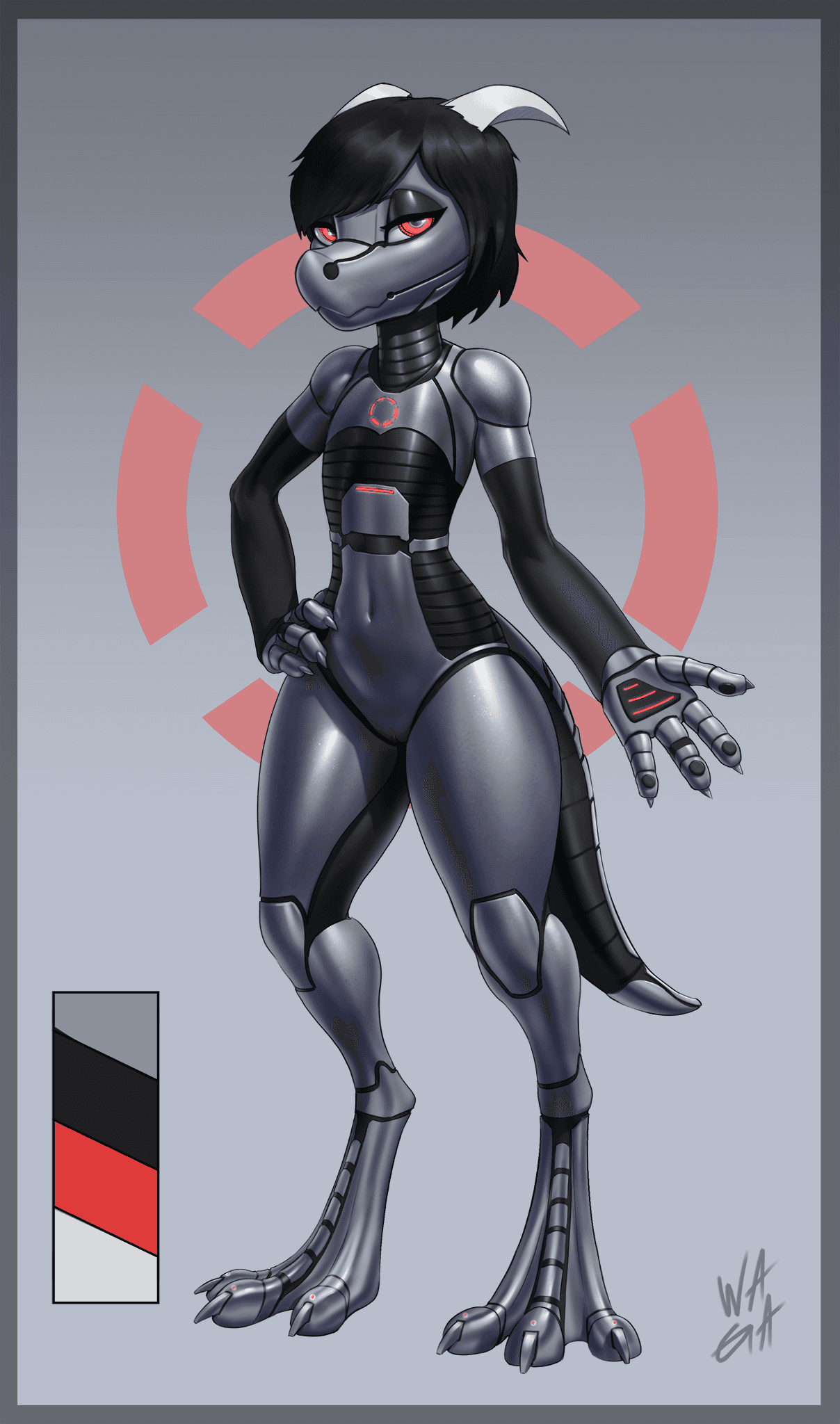
01 / Skin & shell
The nanocarbon midshell
Beneath the outer plating is a tightly woven, flexible nanocarbon layer. It can be hard as diamond or soft as silk, depending on what is needed.
This midshell and the customizable outer covering are distinct parts of a Kobot’s construction. Soft, flexible nanocarbon can also be used as an additional outer layer.
02 / Outer covering
Outer plating & equipment
Outer plates can use different materials depending on the job or design, from steel and dense neutronium plating to another layer of flexible nanocarbon.
The outer frame also supports specialized exo-harnesses for mining, zero-gravity flight, and protection from the pressure of deep-sea expeditions.
03 / Movement
Mimir synthetic muscle
Mimir synthetic muscles use a carbon-fiber-based construction paired with control servos and limiters. That combination supports both heavy loads and carefully controlled movement, from breaking rock to delicate botanical work.
For the same mass, they have roughly five to ten times the strength of most biological muscle matter.
04 / Hearing
Ears & horns
The horn-like ears use audio technology developed for starship communications and transit hubs. Kobots can tune their hearing to keep sounds clear as their surroundings change.
05 / Vision
Eyes
Kobot eyes follow a biological model, with working counterparts to retinas, irises, and pupils. Their design aims to reproduce the way living eyes see rather than relying only on a conventional camera system.
Components can be swapped out or added for specialized vision.
06 / Temperature
Circulation and cooling
A pump-and-tube system carries heated coolant toward cooler extremities. It was designed to accept a range of coolants so that maintenance would not depend on a single supply.
The right coolant depends on where the Kobot will be working.
07 / Cognition
Brain — redacted
The brain’s internal design was redacted in the original construction notes. I haven’t added any further details here.
Research archive / Provisional concepts
Experimental nanotechnology
These were experimental ideas in the old research logs, and I may still leave them out of the lore. They aren’t standard Kobot features or confirmed abilities of Flosk.
Read the experimental research notes
Nanocarbon nanomachinery
The research explored nanobots with the flexibility and durability of nanocarbon plating. Chassis repair, self-replication, and manipulation of mass and size appear in the notes, with parts of the mechanism redacted.
Magnetic fields and changing form
An AI-linked magnetic field was proposed to hold vast numbers of nanobots in a default shape and allow that shape to change. The wiki also mentions brief defensive use of a field, without establishing a complete specification.
Mimetic systems
The WordPress research log describes analyzing organic or inorganic materials and imitating their surface appearance. The underlying process remains redacted, and the later wiki entry withholds the description entirely.
Based on the Kobot Education page and construction notes from my old wiki. Original Kobots synopsis · Archived February 23, 2025.